Beyond the factory floor: how motion-based calibration keeps vehicles on the road
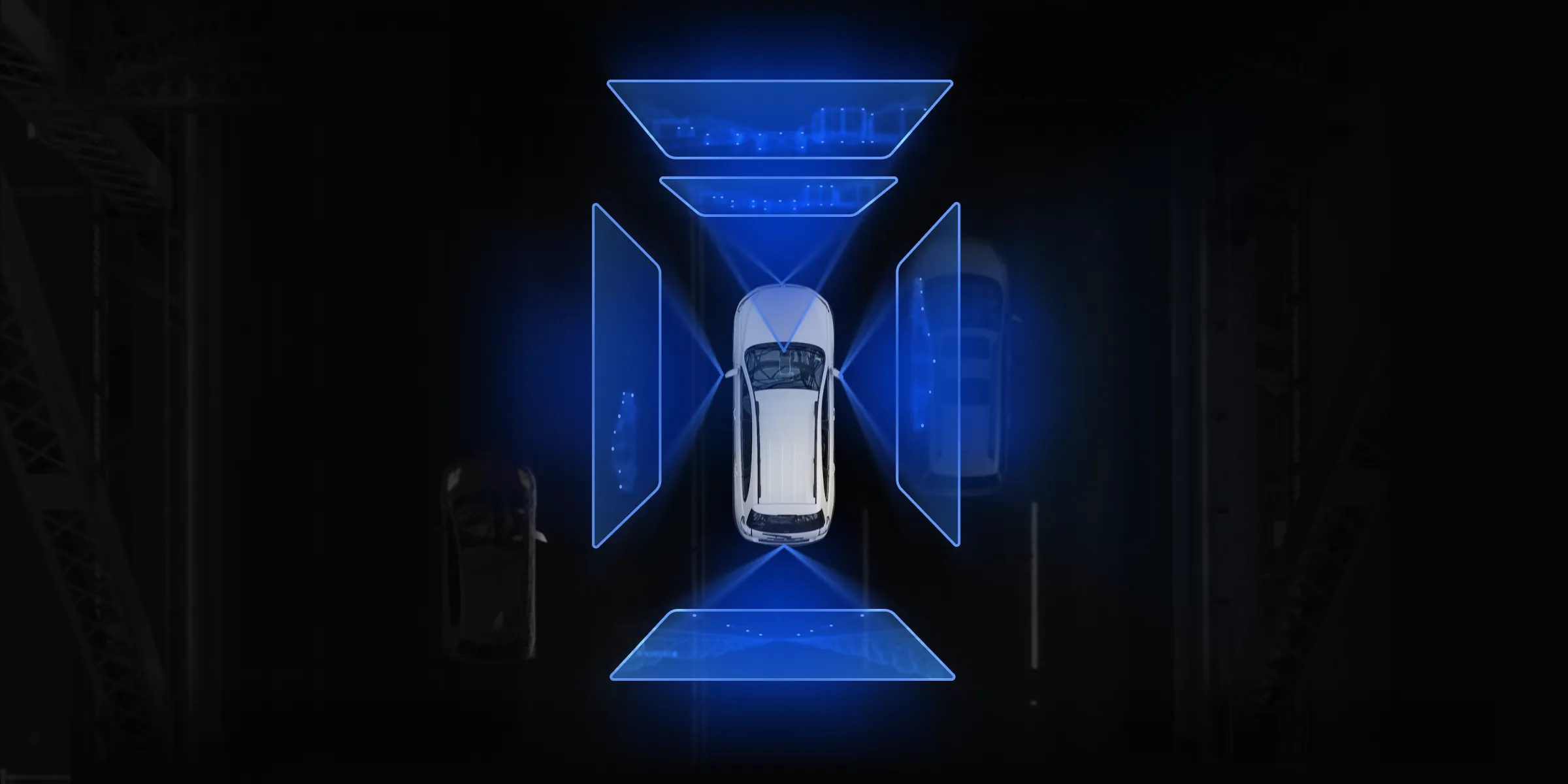
Modern vehicles can, in meaningful ways, already drive themselves. Adaptive cruise control, automated emergency braking and lane keeping assistance are all examples of self-driving capabilities available in modern cars. These systems typically depend on several cameras, distributed across the vehicle and working together, to build a continuously updated and accurate view of the surroundings. Those cameras are positioned at specific locations in the car, such as behind the windshield, in the side mirrors, and in the bumper areas, so that each is covering a specific zone or field of view around the car.
Each camera works individually but also as part of a larger perception system to cover the road in every direction. The system of cameras in each vehicle collectively senses the surroundings to enable the various self-driving functions. Together, they detect the car braking ahead. They read the lane markings. They fuse data with the onboard RADAR and LIDAR systems to build a picture of the road environment. But none of these functions work unless each camera's precise position and orientation are known: exactly where it sits on the vehicle, and the exact direction it is pointing.
That process of determining the position and the orientation of each camera, relative to the vehicle and the others in the system, is known as calibration.
The limits of a snapshot
A vehicle's design specifications define exactly where each camera sits and where it points. In principle, that information should be sufficient for a multi-camera perception system to function correctly. In practice, it isn't. Manufacturing processes introduce small but meaningful deviations from the design spec — fractions of a millimetre in position, fractions of a degree in orientation. The CAD model, which represents the vehicle’s intended design, places a camera in one location; the physical vehicle leaves the production line with it in a slightly different one. If the system uses the design position rather than the actual one, every detection that camera makes is being measured from the wrong reference point.
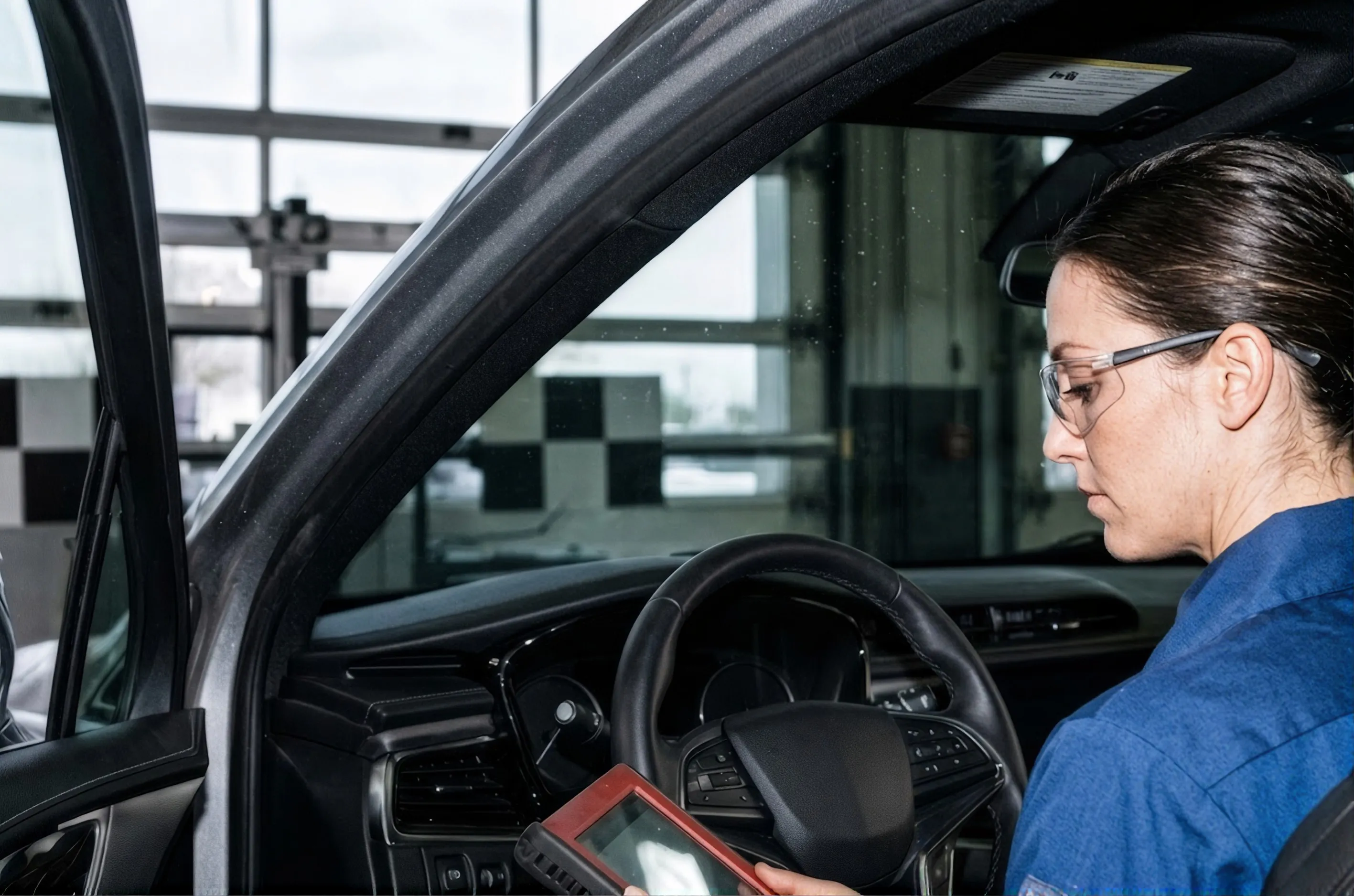
A small error in camera orientation (less than a degree) can cause the perception system to place a detected object several metres from its actual position at highway range. In lane estimation, the system reads road markings to estimate road geometry and localise the vehicle within the lane. A miscalibrated camera corrupts that estimate, and can cause the vehicle to drive in the wrong position in the lane. This reduces distance to other vehicles or obstacles, increasing risk of collision. In obstacle detection, this same small error can result in a hazard being registered as outside the vehicle's path when it is actually on it. A system that places an obstacle outside the lane in this way may not initiate automatic or emergency braking, with potentially fatal consequences.
Factory calibration is the solution to that problem. When a vehicle leaves the factory, its cameras are calibrated against physical targets on the production floor. The position of each camera relative to the vehicle is measured, recorded, and saved. At that moment, the data is accurate.
The problem is that vehicles change. Temperature changes expand and contract components. Minor impacts from uneven roads shift mountings by a fraction. Even a routine windshield replacement moves the cameras mounted behind it. None of these changes are dramatic, but calibration errors compound over time and are meaningful at distance.
Factory calibration captures the vehicle at one point in time. It cannot account for what happens after.
Calibration that moves with the vehicle
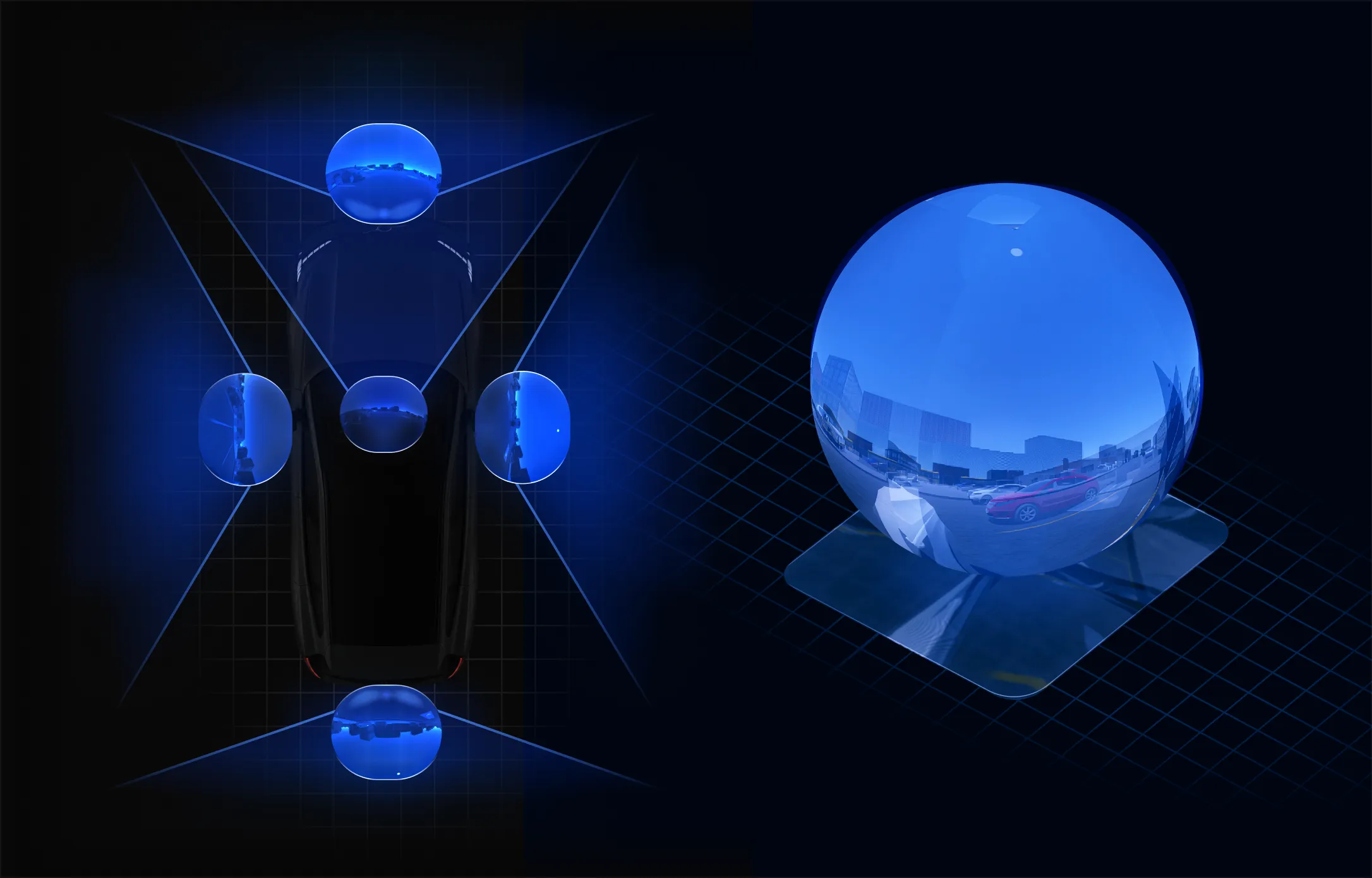
Univrses' approach removes the dependency on static calibration targets entirely. Rather than calibrating the vehicle against fixed reference points, the system uses the vehicle's own motion to solve the problem continuously, as the vehicle drives.
This works by analysing the small overlapping areas in the field of view between adjacent cameras on the car. Where two cameras see the same point from different positions, the system can estimate that point’s position in three dimensions (just as our two eyes enable our brains to see the world in 3D). Using enough of these points between each of the various camera pairs, the system can determine precisely where each camera sits and how it is oriented.
What does it save a manufacturer?
The implications of adopting this dynamic approach to calibration span the vehicle's entire lifecycle. For manufacturers, it eliminates the need for dedicated calibration infrastructure at the point of production. One global OEM is redesigning its production facilities to remove factory calibration rigs entirely, rendered redundant by motion-based calibration. That removes minutes from the production cycle per vehicle — a saving that compounds across every unit produced — and eliminates the capital cost of building, maintaining and continuously investing in precision calibration rigs.
Recalibration without the workshop
For aftermarket support, the implications extend further still. Service networks no longer need to be equipped with dedicated calibration capabilities at all. Across potentially thousands of service locations worldwide, that is a substantial ongoing investment eliminated entirely for the manufacturer. For the vehicle owner, it means that recalibration after a windshield replacement or a minor impact no longer requires a workshop technician to set up targets, follow a calibration procedure, or send the vehicle to a specialist. The system handles it.
Built to automotive safety standards
The result is a vehicle that stays accurately calibrated across its entire lifespan, and a production and service model that is simpler and less expensive to run.
Among the frameworks Univrses works within are ASPICE, ISO 26262 and ISO 9001, used to guarantee safety through traceability and established best practices. These frameworks govern everything from how code is developed and documented to how it is tested and validated. The software goes through hardware-in-the-loop testing and in-vehicle validation before it reaches production.
What accurate calibration makes possible
Accurate calibration is not an end in itself. It is the foundation on which the rest of the perception stack is built. Univrses' wider automotive perception software is built around this core component, which is already running in production vehicles from leading global manufacturers.
One example of Univrses’ perception capability that depends on dynamic calibration is sensor fusion, which combines data from cameras, RADAR and LIDAR into a coherent model of the vehicle’s surroundings. This component requires each sensor to be accurately positioned in a shared reference frame. Without it, the data streams cannot be reliably combined. The same applies to the 360-degree surround view used during low-speed manoeuvring, which stitches together imagery from cameras around the vehicle into a single coherent picture.
But calibration is not just a performance input. It is part of the safety case. ADAS features cannot be responsibly enabled if the vehicle cannot rely on its sensors being correctly calibrated. A camera that is slightly misaligned does not simply produce a less elegant output. It can change how the system interprets distance, position and risk.
That dependency runs through a wider set of Univrses capabilities: tracking moving vehicles, static objects such as traffic signs and other features across space and time; classifying objects and situations; estimating the vehicle’s motion with high precision; localising it within its environment; and reconstructing the surrounding scene in three dimensions. All of these functions depend on the same basic requirement: the system needs an accurate understanding of where each sensor is, how it is oriented and how its observations relate to the observations made by the other cameras in the system.
The same precise sensor positioning that makes automotive perception possible also underpins Univrses’ infrastructure monitoring work. 3DAI™, the system used by cities and national road authorities across Europe to monitor road conditions from ordinary vehicles, depends on cameras that are accurately calibrated as they drive. To turn vehicle-captured imagery into structured, 3D, geo-referenced road intelligence, the system must know not just what each camera sees, but exactly where the camera was positioned when it saw it. Calibration provides that anchor, the link between an image and a location in the world.
Motion-based calibration is foundational to every layer of automotive perception, from the ADAS features available in vehicles today to the autonomous systems that will follow. Univrses' position as a supplier of production-grade perception software places the company at the centre of how that next generation of mobility is being built.
Talk calibration with our team
See how our motion-based calibration works for you

Scelto da enti stradali nazionali e costruttori di veicoli internazionali